
Barcode, DataMatrix, and Serial Number Marking in the Electronics Industry: Permanent Traceability Guide
How are barcodes, DataMatrix codes, and serial numbers marked on electronic products? Discover permanent Dotpeenator laser and dot-peen solutions for PCBs, chips, and metal chassis.
By Erden Arıkan · Mechatronics Engineer
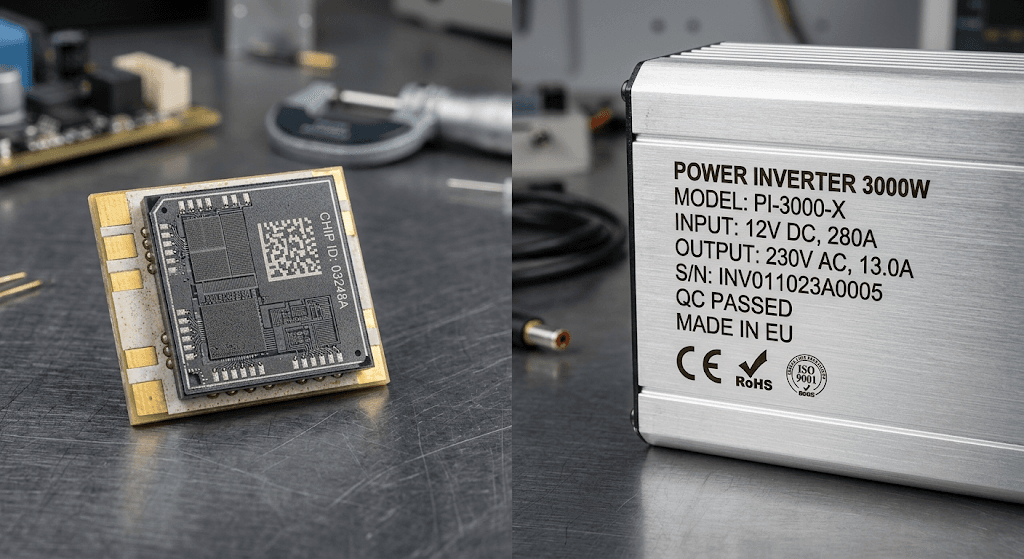
Permanent identification is the foundation of ensuring production efficiency and retroactive traceability across all electronic components—from printed circuit boards (PCBs) and microchips to aluminum control housings and consumer electronics. Warranty tracking, anti-counterfeiting, unauthorized service prevention, and quality control processes are managed via unique serial numbers and high-density 2D DataMatrix codes marked directly onto parts. Against the risk of traditional adhesive labels and ink prints rubbing off under high operating temperatures or solvent exposure, industrial laser and dot-peen marking systems engineered in-house deliver lifetime permanent solutions.
The Role of Permanent Barcode and Serial Numbering in Electronics Manufacturing
Direct Part Marking (DPM) applied on electronics manufacturing lines grants each component a unique digital identity by engraving alphanumeric text, 1D barcodes, and 2D DataMatrix codes onto the part.
- 2D DataMatrix and Micro 2D Code Marking: Compresses hundreds of characters of production history, part revision codes, and component serial data into just a few square millimeters, scannable within milliseconds by automated optical readers.
- Unique Serial Number and Batch (Lot) Tracking: Warranty periods, service histories, test results, and authorized repair records are linked to the central ERP database via unique serial numbers.
- Prevention of Counterfeiting and Fraudulent Warranty Claims: Tamper-proof codes that cannot be scraped off prevent unauthorized aftermarket chips and counterfeit circuit boards from being passed off as original products.
Permanent Marking Technologies in the Electronics Industry
The right technology must be selected based on the material diversity and component sensitivity in electronics manufacturing:
- UV Laser Marking (Cold Marking): Reduces the Heat Affected Zone (HAZ) to zero thanks to its 355 nm wavelength. Produces micron-level white/dark contrast on sensitive microchip packages, SMD components, and flame-retardant (FR4) PCB surfaces without risk of thermal damage or perforation.
- Fiber and MOPA Laser Marking: Delivers high-speed, zero-consumable, and high-contrast marking with adjustable pulse width on aluminum chassis, copper connectors, stainless shielding plates, and hard plastic housings.
- Dot-Peen Marking: Operating by indenting mechanical indentations into metal with a carbide pin, this method provides deep mechanical marking that remains legible even after painting on power transformers, electrical panels, server cabinets, and thick cast enclosures.
- Limitations of Traditional Methods: Thermal transfer labels peel off over time under high heat or alcohol/solvent cleaning; inkjet systems introduce an extra maintenance burden in electronics cleanrooms due to clogged nozzles and risks of liquid chemical contamination.
Key Advantages of Permanent Marking for Electronics Manufacturers
- Zero Consumables and Uninterrupted Line Flow: Solid-state laser and mechanical stylus architectures require no ink, solvent, or ribbon, eliminating unplanned downtime and consumable costs.
- Micron-Level Precision and High Readability: Engraves sharp DataMatrix codes compliant with ISO/IEC 15415 quality standards even on the smallest SMD components.
- Complete Resistance to Harsh Operating Conditions: Ensures lifetime indelibility against soldering heat (reflow processes), ultrasonic cleaning chemicals, vibration, and abrasion.
- Full Automation and Marking-on-the-Fly: Marks moving electronic parts on high-volume production lines instantly without stopping, operating in full synchronization with conveyor belt speed.
Selecting Between Laser and Dot-Peen Marking in Electronics Manufacturing
When determining the most suitable system for your process requirements:
- Fiber and UV Laser Marking: The indispensable optical choice for micron precision, aesthetic surface quality, and ultra-high speed on PCB boards, chips, sensitive plastics, connectors, and aluminum device enclosures.
- Dot-Peen Marking: Used for deep mechanical durability on heavy electrical enclosures, generator bodies, cast chassis, and industrial power units requiring high mechanical impact resistance.
Zero Defects and High Efficiency in Electronics Manufacturing with Dotpeenator
Built with our in-house engineering expertise, Dotpeenator dot-peen marking machines and Laserator brand Fiber Laser, UV laser, and CO2 lasers seamlessly integrate into your electronics production lines via PLC, MES, ERP communication protocols, and barcode reader camera integrations. With zero consumable costs and high repeatability, they increase your plant's Overall Equipment Effectiveness (OEE).
Contact our engineering team at dotpeenator.com to determine the ideal marking configuration for your electronic components and to request free sample marking on your PCB and chassis parts.