
What is DPM (Direct Part Marking)? Fundamentals of Industrial Traceability
What is DPM (Direct Part Marking), why is it used, and why is it critical for industrial traceability? Discover DPM technologies with Dotpeenator™ and Laserator™.
By Erden Arıkan · Mechatronics Engineer
What is DPM (Direct Part Marking)? Fundamentals of Industrial Traceability
In today's industry, with the advancement of Industry 4.0 and rising quality assurance standards, the concept of "traceability" has become the most critical component of manufacturing. It is vital for a product or part to be tracked from the moment it leaves the production line until it reaches the end user—and even throughout its entire lifecycle. This is precisely where DPM (Direct Part Marking) technology comes into play.
So, what is DPM, which is rapidly becoming a standard in industrial manufacturing, and what value does it add to your production processes? In this article, we provide an in-depth introduction to DPM technology, the foundation of industrial traceability.
What Exactly is DPM (Direct Part Marking)?
DPM is the process of directly applying permanent identification codes (DataMatrix, serial numbers, QR codes, etc.) onto a product, component, or sub-assembly via physical or chemical alteration.
Unlike paper labels, adhesive barcodes, or plastic tags, in the DPM process, the code becomes an integral part of the workpiece. These marks, engraved, indented, or laser-marked directly onto the surface, ensure that the data remains intact and indelible throughout the part's lifecycle.
What are the Superior Advantages of DPM over Traditional Labels?
Why should you use DPM on your production line instead of traditional labels? The challenges encountered in harsh industrial environments provide the clearest answer to this question:
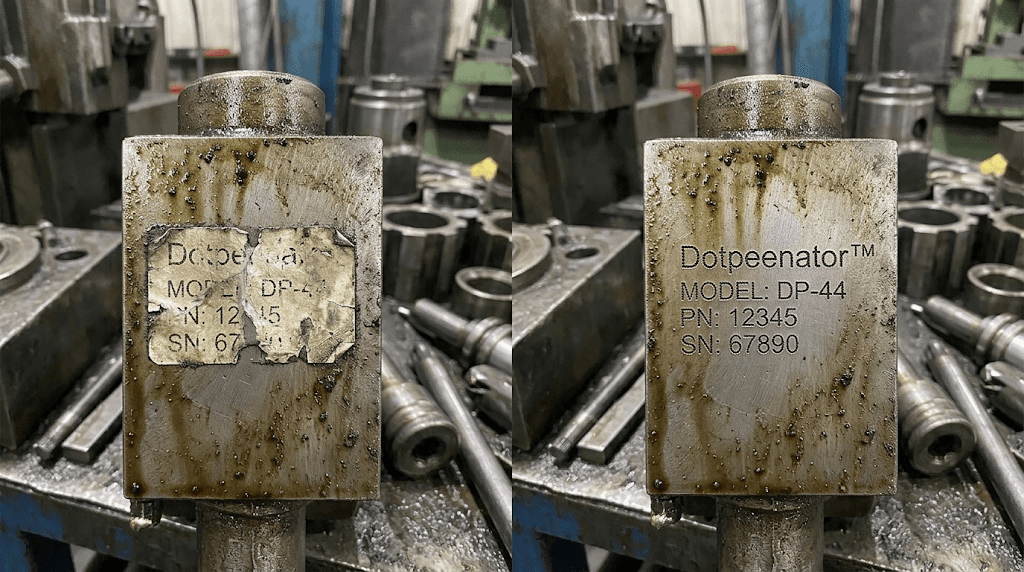
- Permanence: Traditional labels can peel off, tear, or lose adhesion over time. DPM, on the other hand, creates a permanent deformation or color change on the part itself, meaning it can never be lost.
- Resistance to Harsh Conditions: Extreme temperatures, chemical solvents, oil, dust, abrasion, and UV radiation do not affect DPM codes.
- Counterfeiting Prevention: While it is easy to peel off a label and stick it onto another product, altering or duplicating a DPM code engraved directly into metal or plastic is virtually impossible.
- Cost Savings: It eliminates the recurring costs of purchasing labels, ink cartridges, and thermal ribbons.
Which Code Types are Used in DPM Applications?
A wide variety of data can be marked onto parts using DPM technology. The most preferred code formats based on industry requirements include:
1. 2D DataMatrix Codes
When DPM is mentioned, 2D DataMatrix codes are the first format that comes to mind. They can store large amounts of data (production date, lot number, manufacturer code, part number) in an extremely compact area. Furthermore, even if part of the code is damaged, it can still be read thanks to built-in error correction algorithms.
2. Alphanumeric Characters and Serial Numbers
Vehicle identification numbers (VIN), engine numbers, casting numbers, or batch (lot) codes that need to be human-readable are marked directly onto the surface.
3. Logos and Vector Graphics
To enhance brand recognition and display quality control compliance marks (such as the CE mark), corporate logos and vector symbols are permanently engraved onto parts.
Which Industries are Required to Use DPM?
Flawless traceability is not an option for some industries; it is a regulatory requirement. Key sectors where DPM technology is extensively utilized include:
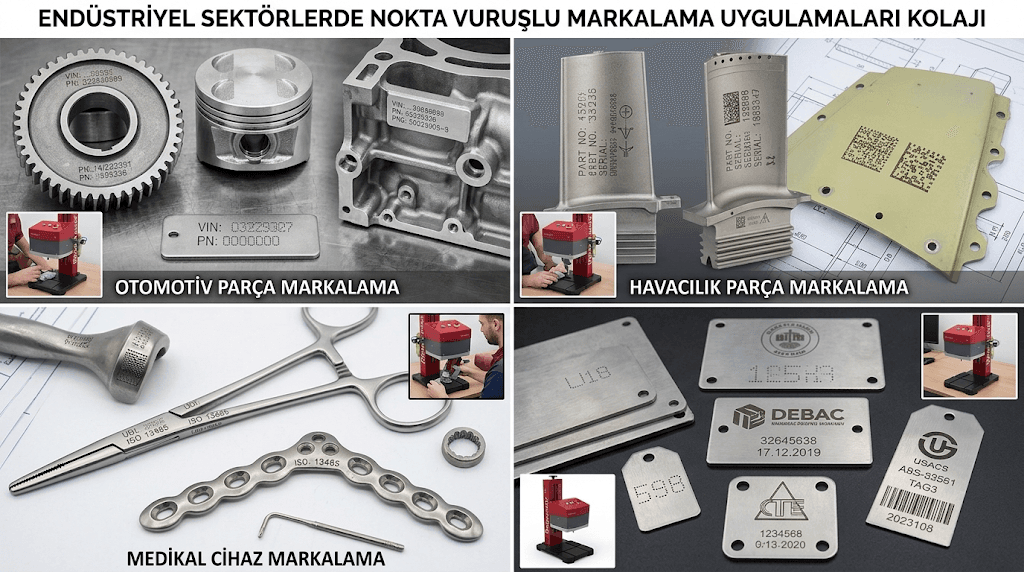
- Automotive and Tier Suppliers: On engine blocks, chassis components, brake discs, and transmission gears.
- Aerospace: Since safety regulations mandate that every single critical component must be traceable during aircraft manufacturing and periodic maintenance.
- Defense Industry: For inventory and lifecycle tracking of weapon components, ammunition, and military vehicle hardware.
- Medical and Surgical Devices: To ensure surgical instruments can be tracked without degradation through sterilization (autoclave) cycles (UDI standards).
Our Powerful Solutions for DPM Technology: Dotpeenator™ and Laserator™
There are two primary technologies on the market that set industrial standards for direct part marking: Dot Peen Marking and Laser Marking.
As SERMATEK MAKİNA, we provide the most advanced technology for your DPM needs across your production lines:
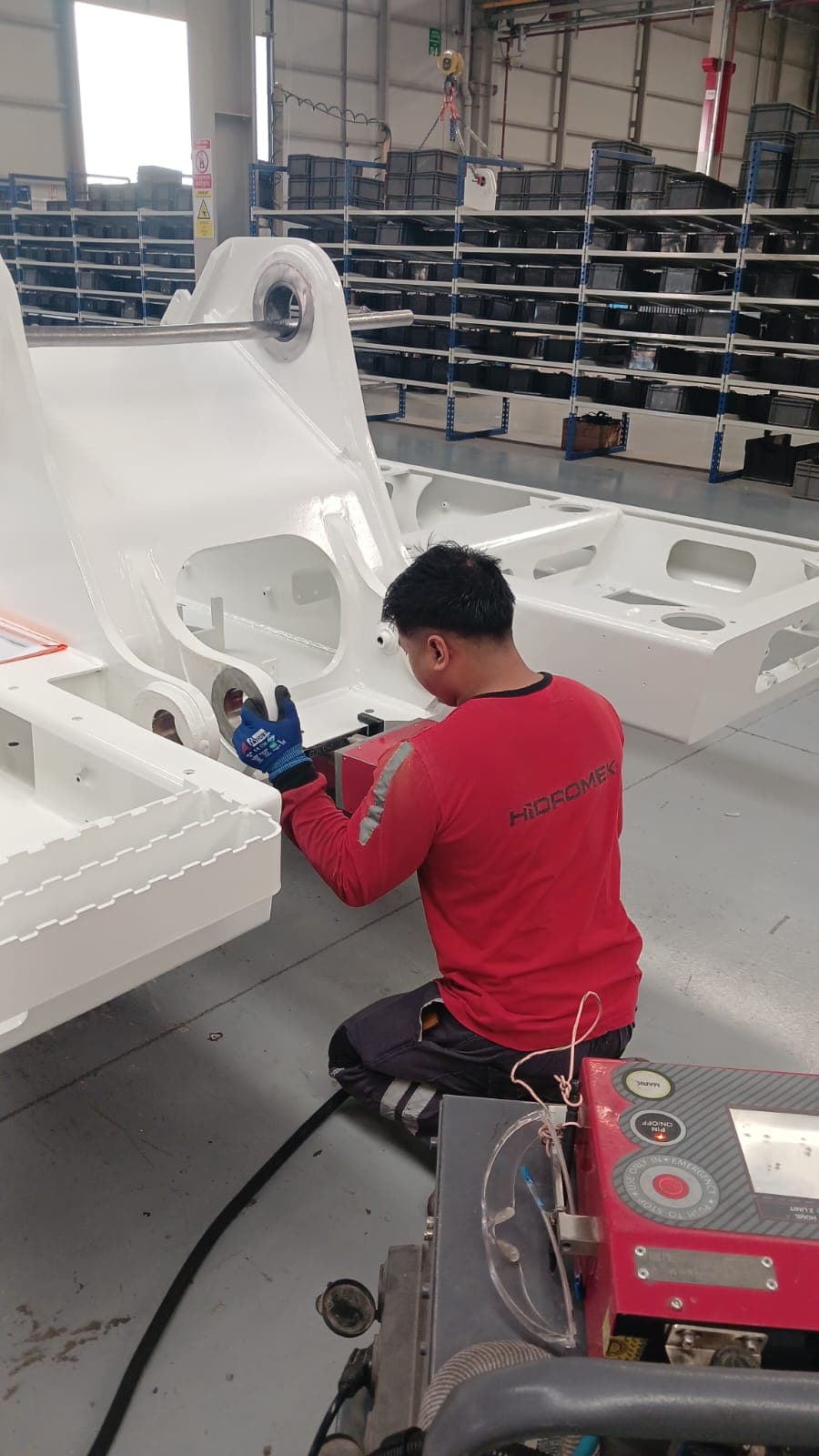
- For Depth and Harsh Surfaces: For heavy industrial parts that are oily, rough, or will undergo painting or shot-blasting, our Dotpeenator™ dot peen marking machines (PR144, PR94, SA14, etc.) offer the highest level of permanence.
- For Speed, Non-Contact Processing, and Micron Precision: To mark high-density DataMatrix codes on delicate or miniature parts with flawless contrast in seconds, our Laserator™ fiber laser systems (TASKY, HANDY, METROPOLIS, etc.) are indispensable for your production lines.
Don't miss the next article in our series to discover which DPM method best suits the nature of your manufacturing process!
🔜 What's Coming in Our Next Article?
In Part 2 of our series: Under the title "DPM Marking Methods and Types: How Does Each Technology Work?", we will take an in-depth look at the working principles and comparative advantages of Dotpeenator™ and Laserator™ technologies.