

Pin/Cartridge Sets
Dotpeenator™ YT188P High Tolerance Pin-Cartridge Set
An 8mm heavy-duty pin-cartridge assembly that automatically tolerates level differences of up to 18mm on curved, cast, and stepped surfaces.
View
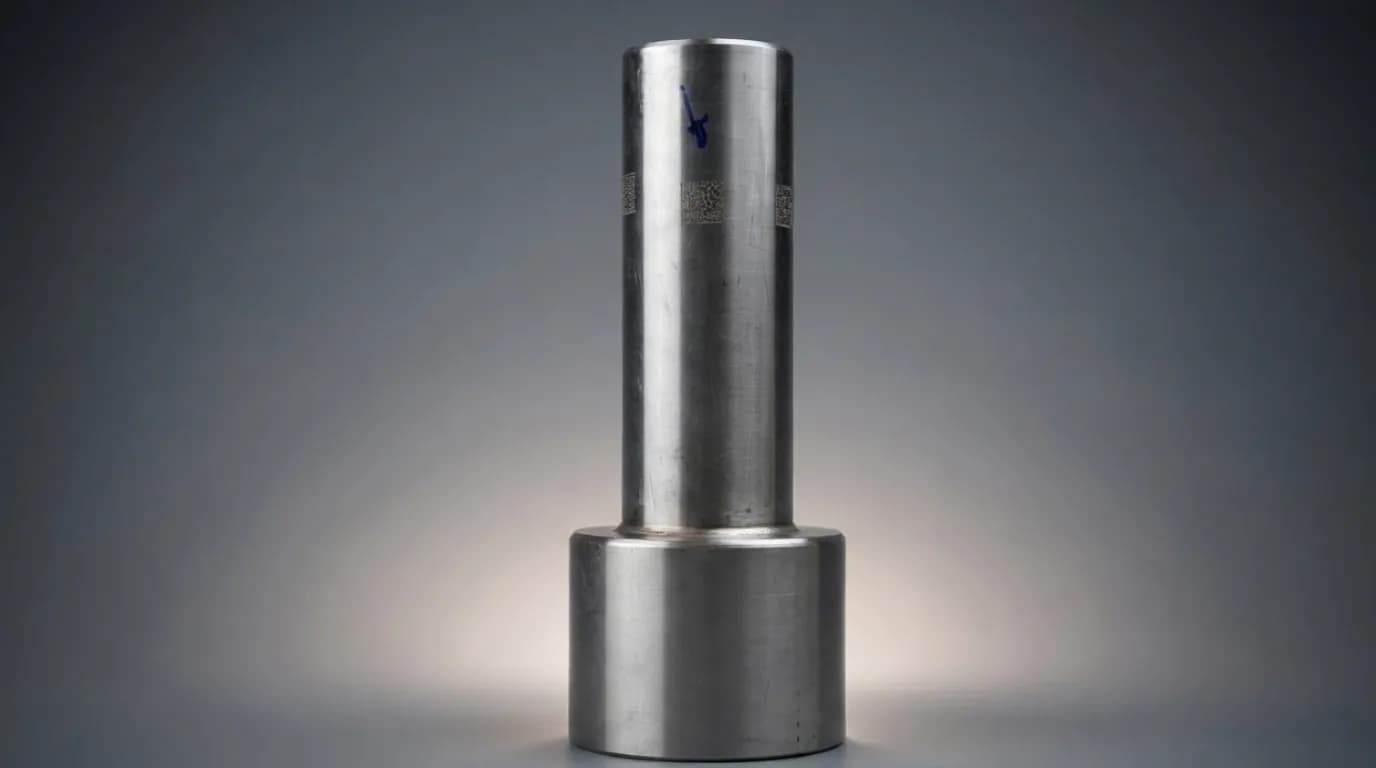
DataMatrix dot-matrix marking on the curved surface of a cylindrical automotive part; readability verified through testing with different code sizes and a standard mobile phone application.
Traceability in the automotive industry is no longer optional. Every part needs to be traceable from the production line to the end of its service life. The standard method is 2D DataMatrix codes directly engraved onto the part.
A major automotive manufacturer approached SERMATEK to test marking on a cylindrical part. The request was clear: a permanent DataMatrix code on a curved steel surface that could be easily read with a standard handheld reader.
DataMatrix codes of varying sizes were engraved onto the part's surface using dot-matrix marking, and each was tested for readability. The codes were deciphered on the first try using a standard smartphone reader application, without requiring any special hardware.
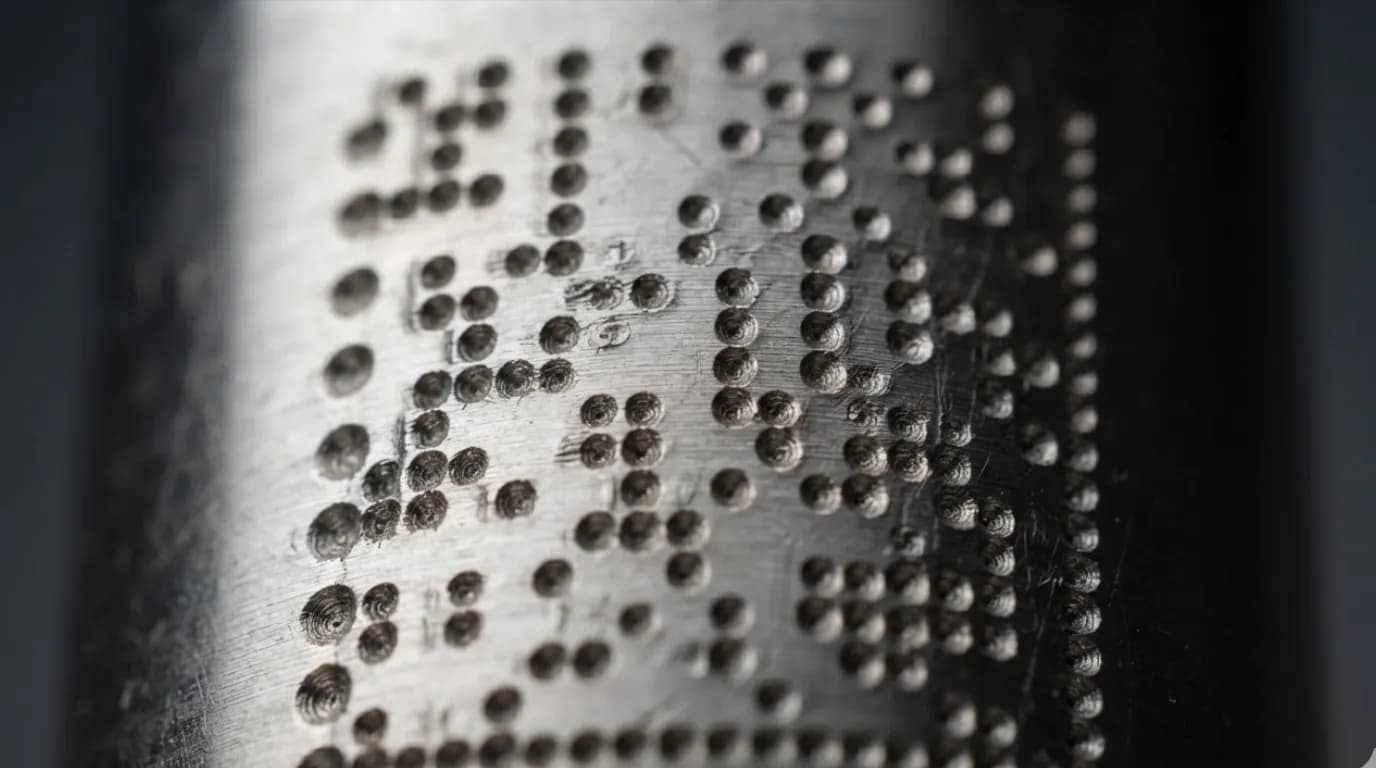
Dot matrix DataMatrix code, macro view on a cylindrical steel surface.
Engraving a DataMatrix onto a flat plate is relatively easy. A cylindrical part, however, presents a different problem. A DataMatrix code is a square cell matrix, and the reader must accurately perceive the geometry of this matrix. If the surface is curved, the code is distorted in the plane seen by the camera; cells become cramped towards the edges, contrast decreases, and the read fails. Therefore, for cylindrical parts, the code size, cell spacing, stroke depth, and the ratio of the code to the part diameter must be considered together. When the correct combination is found, the curved surface ceases to be an obstacle.
DataMatrix codes of different sizes are processed onto the same part to determine the readability limit
Instead of presenting the customer with a single result, multiple DataMatrix codes of varying sizes were mapped onto the same part. The rationale for this approach is practical: the smallest code takes up the least space, but has readability limitations. The largest code is the most reliably readable, but requires more space on the part. The correct size depends on the part's diameter, surface finish, and the reader the customer will use in their production line. By mapping the codes side-by-side and testing them all under the same conditions, the customer's required size for mass production was determined by measurement, not estimation.
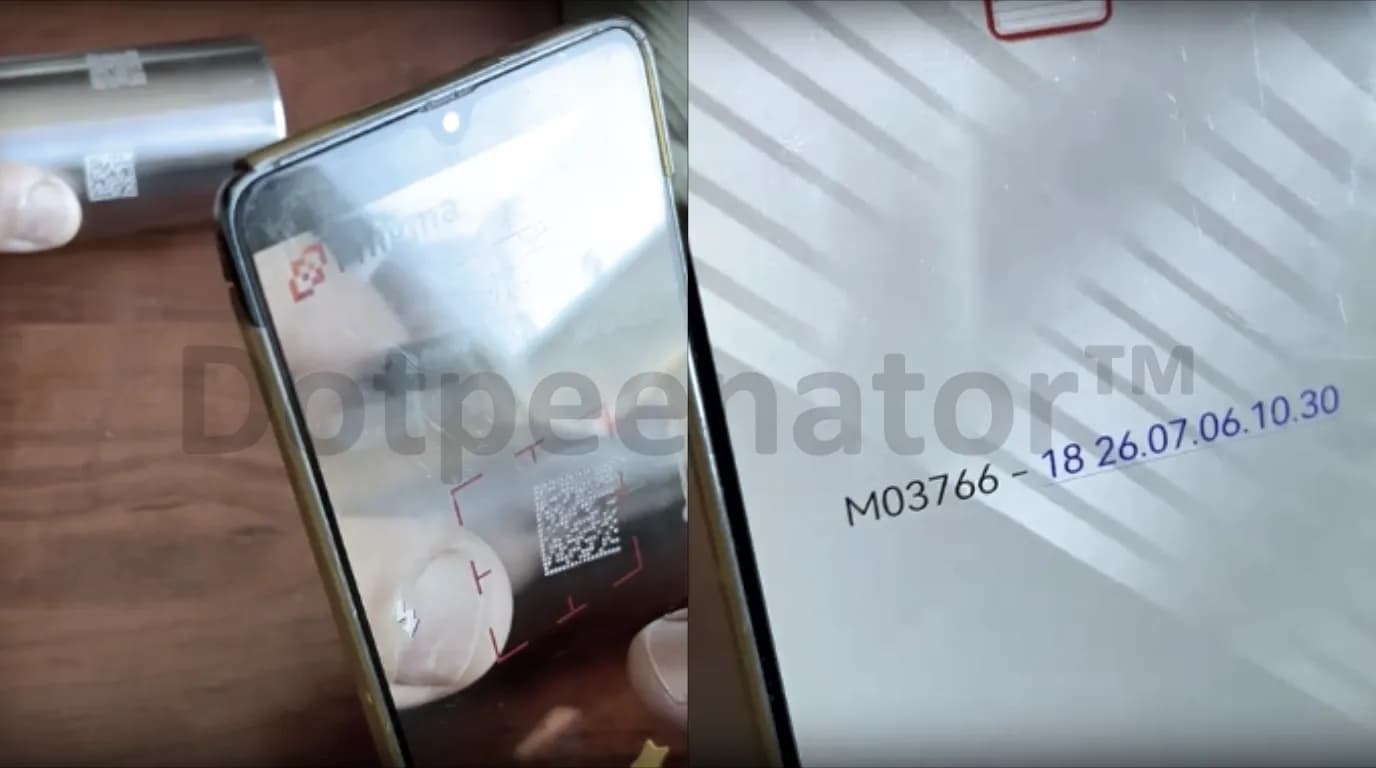
The dot-matrix DataMatrix code was cracked on the first try using a standard phone reader application.
For a branding design to be considered successful, it's not enough for it to look good; it needs to be legible. The processed codes were tested using a standard barcode reader app on an ordinary smartphone, without the need for a specialized industrial reader or special lighting. The code was deciphered on the first try, and the part number and production date and time information appeared completely on the screen. This is concrete proof of the branding quality. A code that can be read with a simple phone camera will be much easier to read with professional stationary readers on the customer's production line.
Direct part marking (DPM) is fundamental to traceability in the automotive supply chain. Dot-match marking offers several tangible advantages for this purpose:
Durability: The code is physically imprinted onto the metal surface. It remains legible through oiling, solvent treatment, heat treatment, post-grinding cleaning, and assembly processes.
High data density: Part number, production date, time, and lot information all fit together in a small area.
No thermal impact: The marking is a mechanical process; the material properties and heat treatment status of the part remain unchanged.
Low operating cost: Consumables are only the marking pin and compressed air; there are no ink, labels, or consumable cartridges.
Label independence: Adhesive labels can fall off or be replaced; the engraved code is the integral identity of the part.