What is Dot Peen Marking? Working Principle, Types, and Industrial Solutions
In demanding industrial manufacturing sectors such as heavy industry, automotive, defense, aerospace, iron and steel, and machinery manufacturing, ensuring part traceability is a vital requirement. Dot peen marking is a permanent mechanical marking technology that remains legible despite harsh surface treatments such as extreme temperatures, humidity, chemical contact, sandblasting, hot-dip galvanizing, and electrostatic powder coating that manufactured parts undergo throughout their service life.
By Erden Arıkan · Mechatronics Engineer
In demanding industrial manufacturing sectors such as heavy industry, automotive, defense, aerospace, iron and steel, and machinery manufacturing, ensuring part traceability is a vital requirement. Dot peen marking is a permanent mechanical marking technology that remains legible despite harsh surface treatments such as extreme temperatures, humidity, chemical contact, sandblasting, hot-dip galvanizing, and electrostatic powder coating that manufactured parts undergo throughout their service life.
What is Dot Peen Marking? How Does It Work?
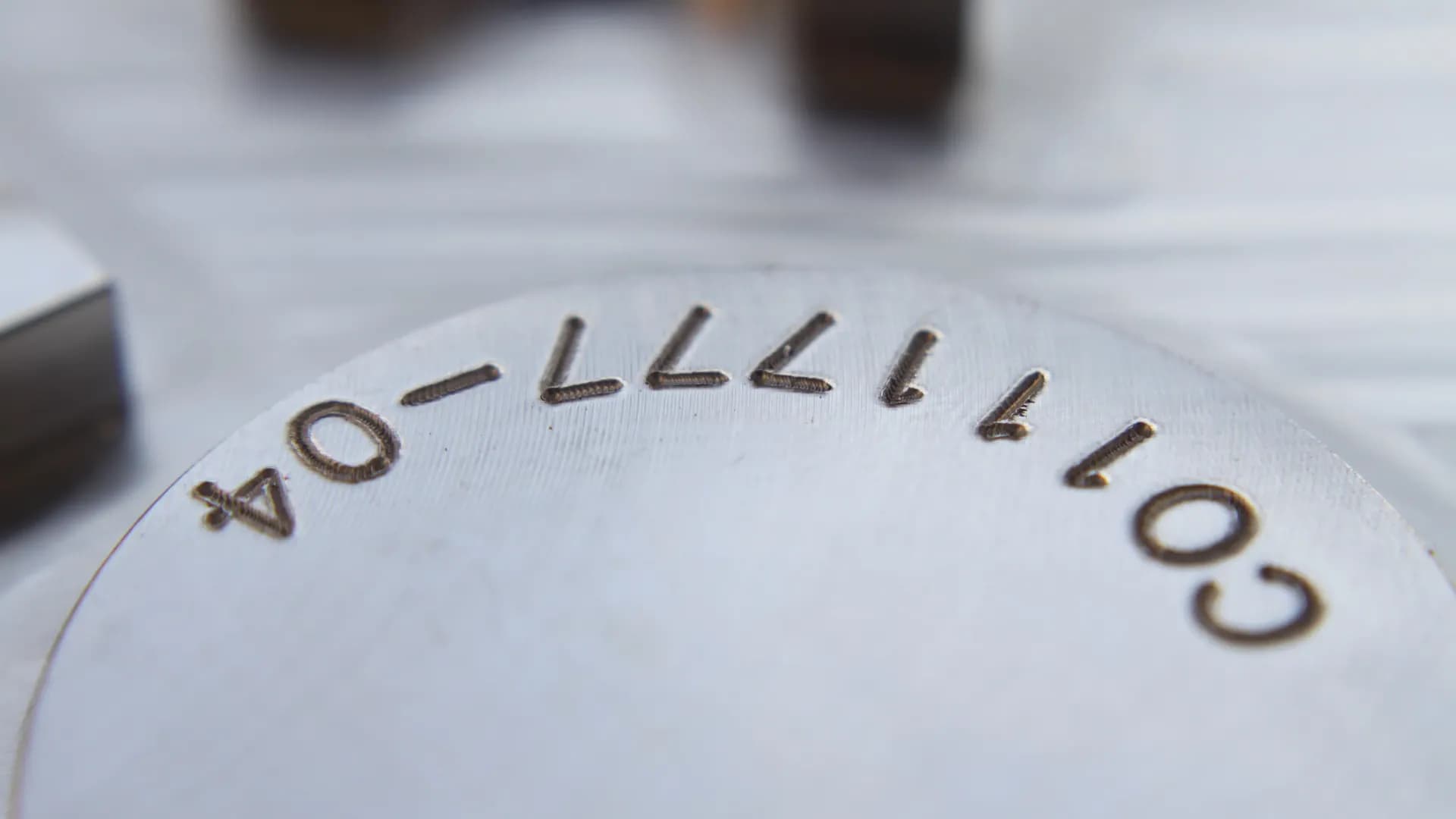
Dot peen marking or pin stamping is a permanent marking method that operates by using a pneumatically or electromagnetically driven, high-hardness carbide or diamond-tipped marking pin to make controlled indentations on the material surface.
By guiding the pin along the X and Y axes with precision stepper motors, consecutive micro-impacts combine to form alphanumeric texts, production dates, shift codes, serial numbers, logos, and 2D DataMatrix codes. Because it mechanically deforms only the surface texture without removing material chips or introducing high heat input, it does not compromise the overall structural integrity of the part. It delivers deep, clear marking even on the toughest metals up to 65 HRC hardness, from hardened steels to cast irons.
Advantages of Dot Peen Marking
Compared to traditional labeling or paint-based marking methods, dot peen systems provide the following critical benefits in industrial environments:
- Complete Resistance to Harsh Operating Conditions: Indented codes are unaffected by external factors such as oil, dirt, high temperatures, rust, and friction.
- Legibility After Painting and Galvanizing: Because physical depth is imparted into the material, readability is retained even after electrostatic powder coating, wet painting, or galvanizing.
- Zero Consumables and Low Operating Costs: Requires no ink, solvents, ribbons, cartridges, or chemicals; the only mechanically wearing part is the long-life carbide pin.
- Electric and Pneumatic Options: Provides the flexibility of electromagnetic drive for portable field use or pneumatic drive for deep workshop marking.
- Portable and Compact Design: Features lightweight body structures that allow operators to easily carry the machine to heavy or bulky parts.
- Fast and Error-Free Operation: Enables part serialization and DataMatrix generation in seconds on automated lines.
Industrial Traceability with Dot Peen Marking
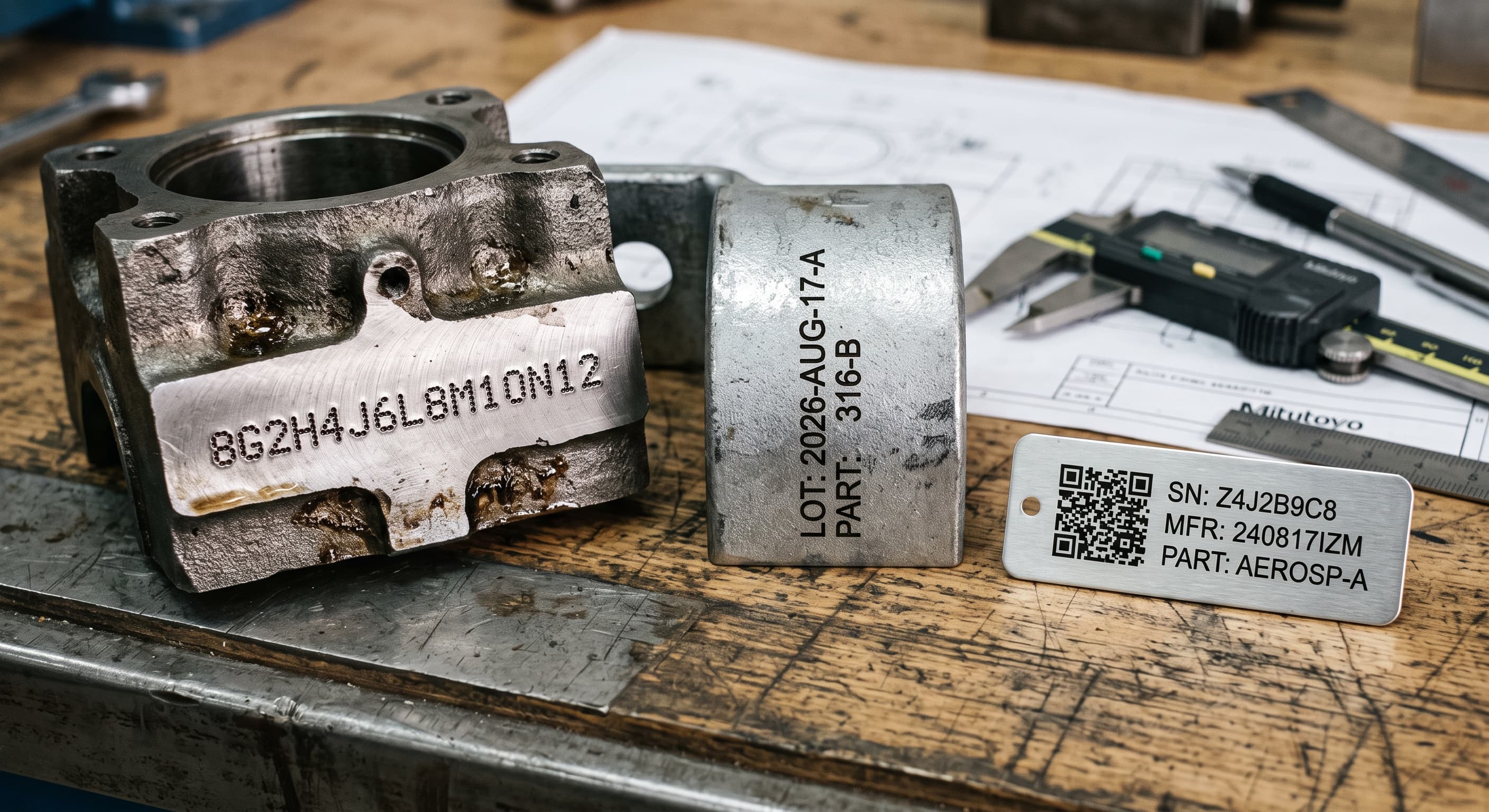
In modern supply chains and quality management systems (ISO, IATF, CE, FDA), backward traceability of every manufactured part is mandatory. Dot peen marking systems connect directly to ERP, MES, and factory automation networks to automatically mark unique serial numbers, batch/lot data, and 2D DataMatrix codes onto parts.
This ensures that in the event of a quality defect or recall, faulty product batches can be immediately identified, production processes remain recorded, and counterfeiting is prevented.
What Materials Can Be Marked?
Dot peen marking technology can be applied to virtually all hard and semi-hard surfaces capable of receiving mechanical indentation:
- Steels and Alloys: Carbon steel, structural steels, tool steels, and hardened steels.
- Stainless Steel: All grades of stainless steel used in chemical, medical, and food processing machinery.
- Cast Materials: Grey cast iron, ductile iron, and cast iron blocks.
- Non-Ferrous Metals: Aluminum, brass, copper, bronze, zinc, and zamak.
- Coated Surfaces: Powder-coated parts, wet-painted surfaces, nickel plating, and hot-dip galvanized sheets.
- Hard Plastics and Composites: Polyamide (PA), ABS, Delrin, and high-density polyethylene (HDPE).
Dot Peen Marking Application and Impact Types
Dot peen machines can be configured in different operating modes according to industrial requirements:
- Deep Marking: High air-pressure marking indented deep into the material for heavy industry, pipelines, flanges, chassis, and cast bodies. Codes remain legible even after parts are coated with thick primer and paint layers.
- Standard Dot Peen: The most common method, quickly applying serial numbers, date stamps, shift data, and 2D DataMatrix codes at standard depths.
- Low-Stress / Rounded Marking: A stress-free marking method applied with custom-radiused, round-tipped pins on critical components prone to mechanical fatigue, such as aerospace, nuclear power, and defense parts, to prevent micro-crack formation.
- Scribe Marking (Scribing): A method where the pin is not hammered, but pressed onto the material surface with pneumatic pressure and dragged to create continuous lines. It operates extremely quietly and produces smooth, aesthetic lines for vehicle identification numbers (VIN codes) and metal nameplates.
What Are the Dot Peen Marking Machine Types?
- Benchtop Systems: Designed for workshop environments to mark small- to medium-sized metal parts, nameplates, and serial production samples via manual feeding.
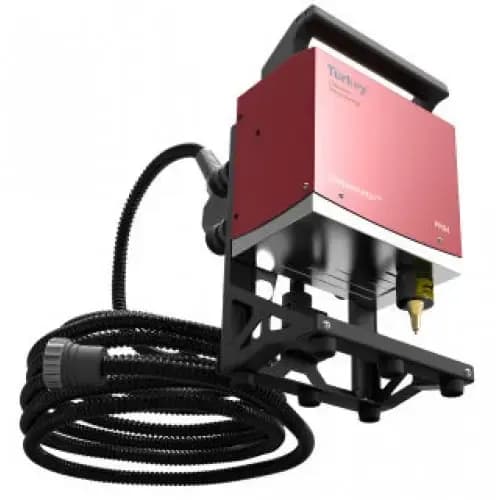
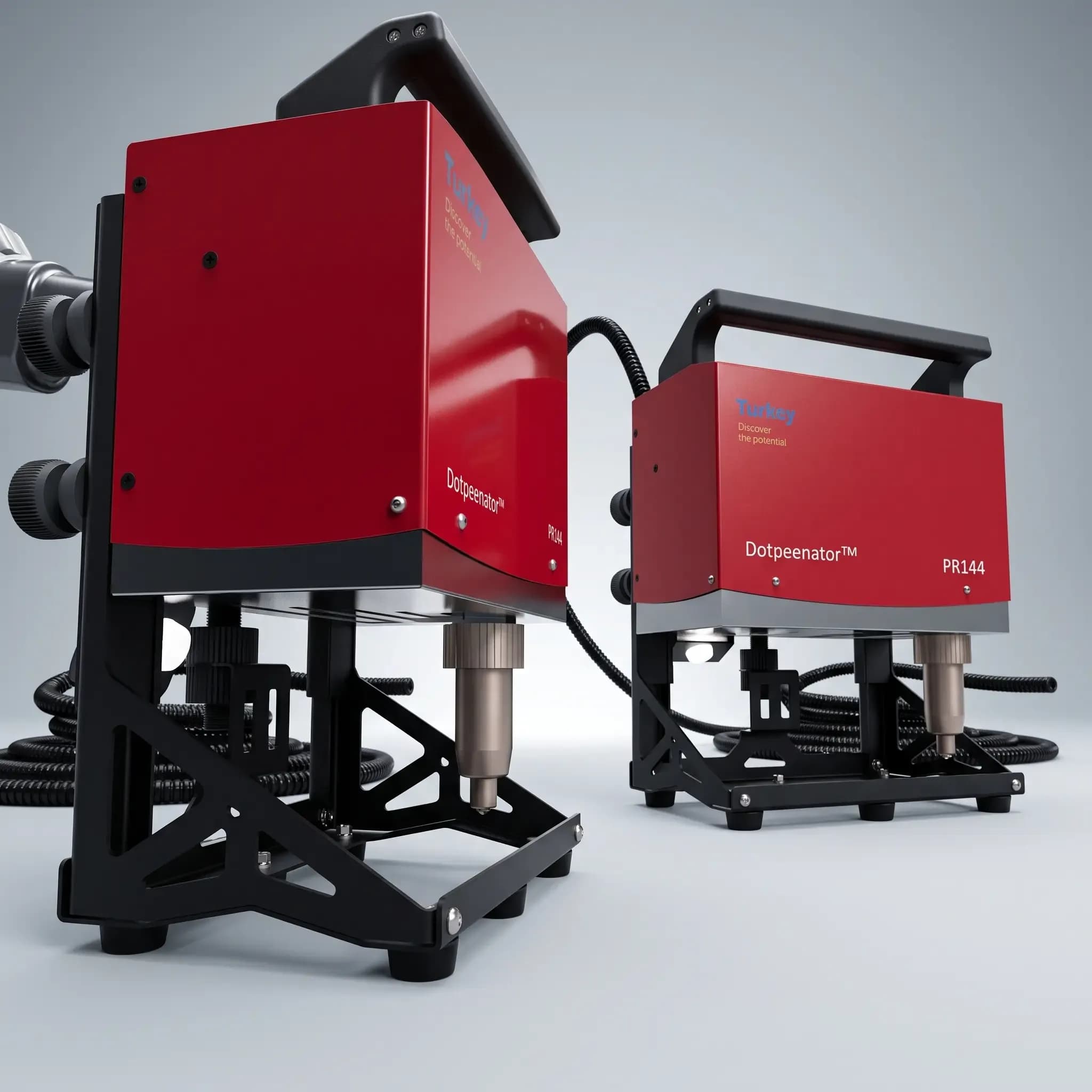
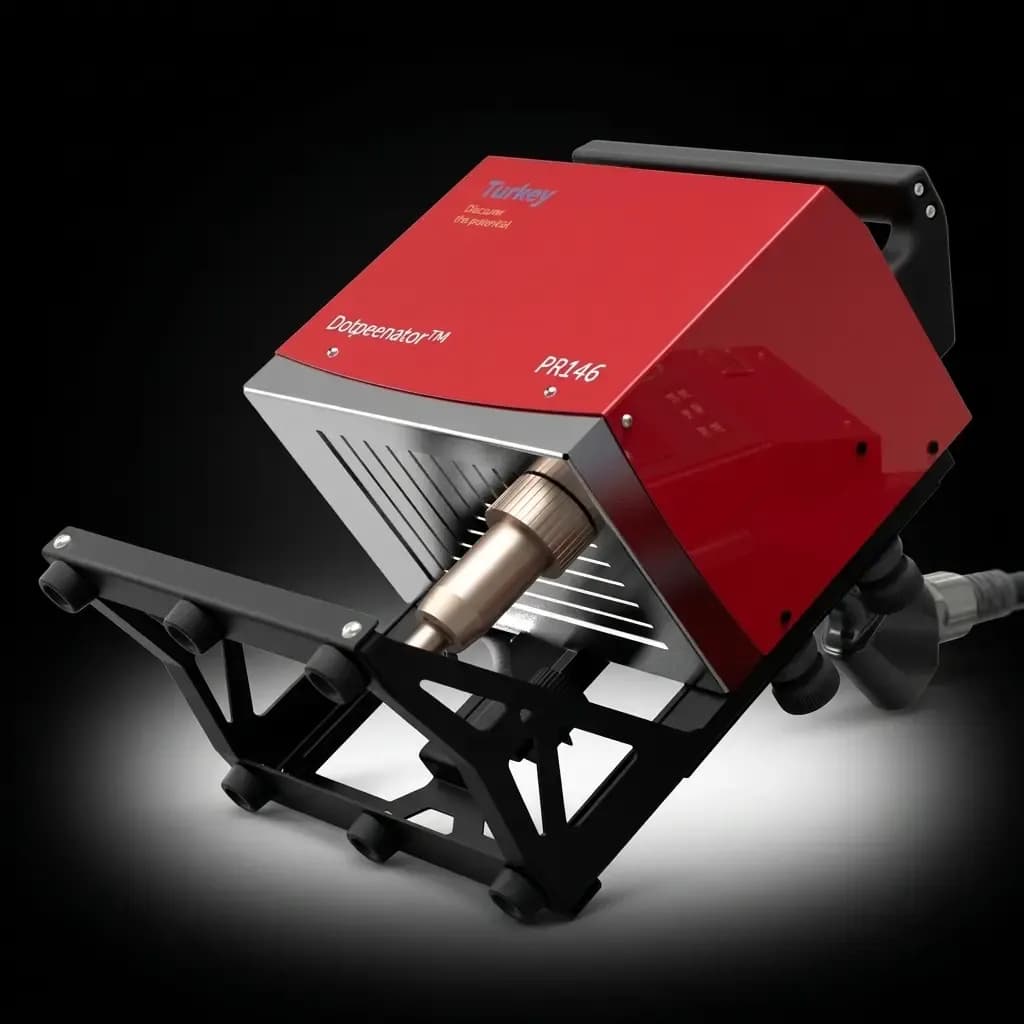
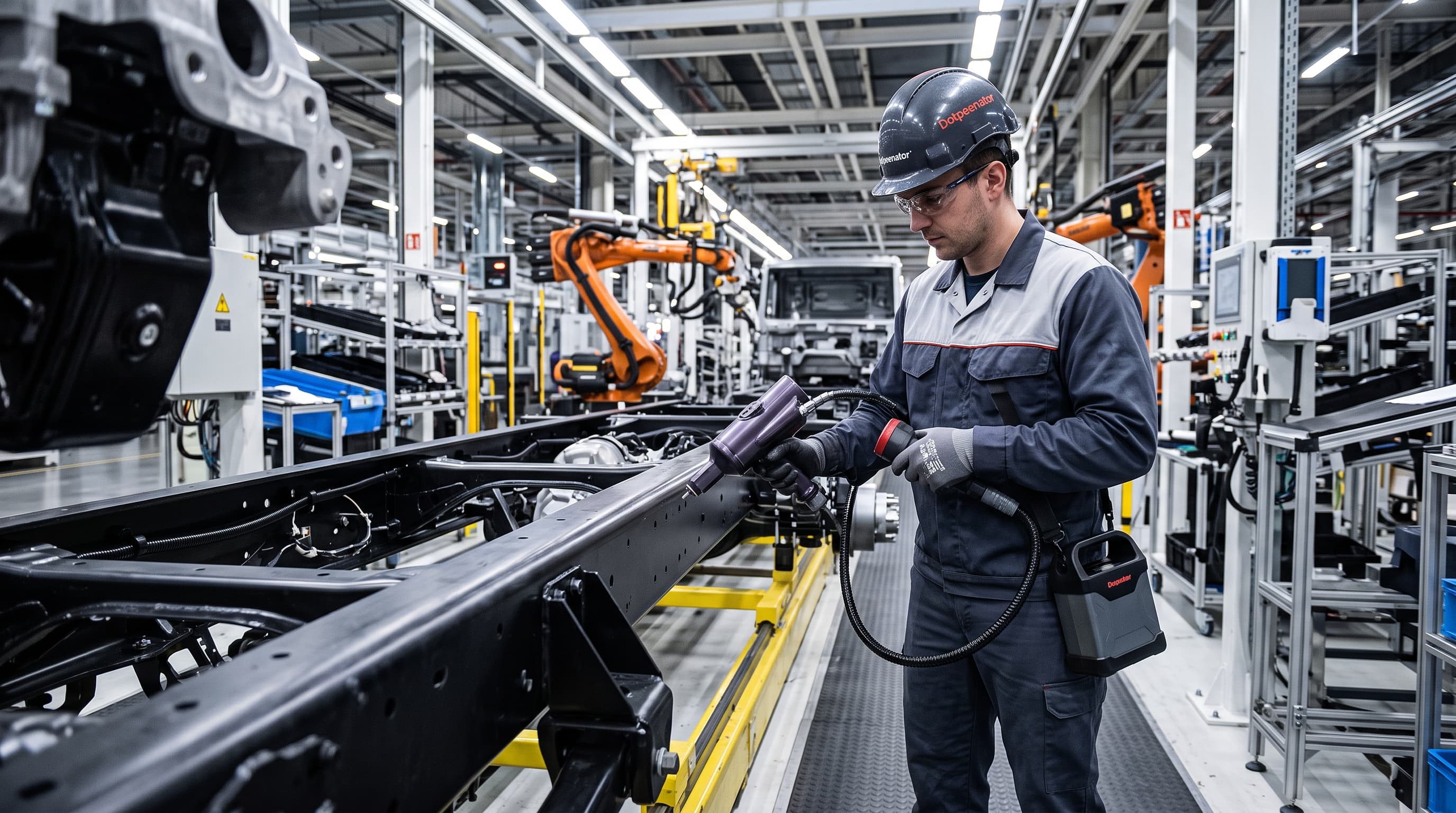
- Portable / Handheld Systems: Lightweight models designed for operators to bring the machine directly to bulky, hard-to-move castings, long profiles, pipes, and chassis.
- Integrable / In-Line Systems: Industrial models mounted directly onto conveyor lines, robotic arm end-effectors, or PLC-controlled fully automated production lines.
Dot Peen Marking vs. Laser Marking
When choosing the right system for your production line, consider the following key differences:
- Dot Peen Systems: Ideal for castings and chassis components requiring physical indentation depth that will undergo post-process sandblasting or heavy painting, heavy industrial environments, and applications where low initial investment cost is targeted.
- Fiber Laser Systems: Preferred for high processing speeds, aesthetic surface contrast, micron-precision micro-text, non-contact operation, and marking thin sheet metal or foil.
Permanent Mechanical Marking Strategy in Industrial Manufacturing
Dot peen metal engraving technology is the most robust solution for preserving lifelong product identification even in the harshest factory conditions. Selecting the right drive type (pneumatic or electromagnetic), pin geometry, and machine build directly enhances your production throughput and traceability quality.
To explore domestic Dotpeenator Dot Peen Marking Systems and Fiber Laser Marking Systems that best match your factory's production requirements, part geometry, and cycle times, and to request free test marking on your sample parts, contact our technical engineering team at dotpeenator.com.